Free software can protect your margin when it removes manual work from estimating. If a tool helps you measure plans, structure quantities, and prepare a defensible first pass without adding software cost, the saved estimating time becomes available capacity for more bids, site visits, and billable work. Autodesk explains that estimating software reduces time spent measuring and counting by automating quantities and calculations, while Buildxact says automation can make estimating up to 5X faster on average (Autodesk's construction estimating guide, Buildxact's estimating guide).
For fast plan or photo triage, start with Platineer Estimate. It can turn an uploaded plan page or jobsite photo into a structured scope, ballpark cost range, line items, timeline, crew estimate, and risk notes. That output is useful for deciding whether a lead deserves a detailed takeoff, but it's still a ballpark. Verify quantities, local labor, material pricing, permits, and scope before you submit a bid.
The ten options below aren't interchangeable. Some measure PDFs, some build line-item estimates, some connect estimates to invoices and job costing, and others offer self-hosted customization. The practical tests are what the free tier really includes, how deep the takeoff workflow goes, which trade benefits first, how painful the upgrade is, what integrations exist, and how much implementation work your team can absorb.
Table of Contents
- 1. Buildxact Go
- 2. ACCA PriMus
- 3. eTakeoff Dimension Basic
- 4. Contractor+
- 5. Methvin
- 6. Solid Takeoff
- 7. BidSheet
- 8. Bidwright
- 9. ProTakeoff
- 10. Platineer Estimate
- Top 10 Free Construction Estimating Tools, Quick Feature Comparison
- Choose the Smallest Stack That Saves Time
1. Buildxact Go
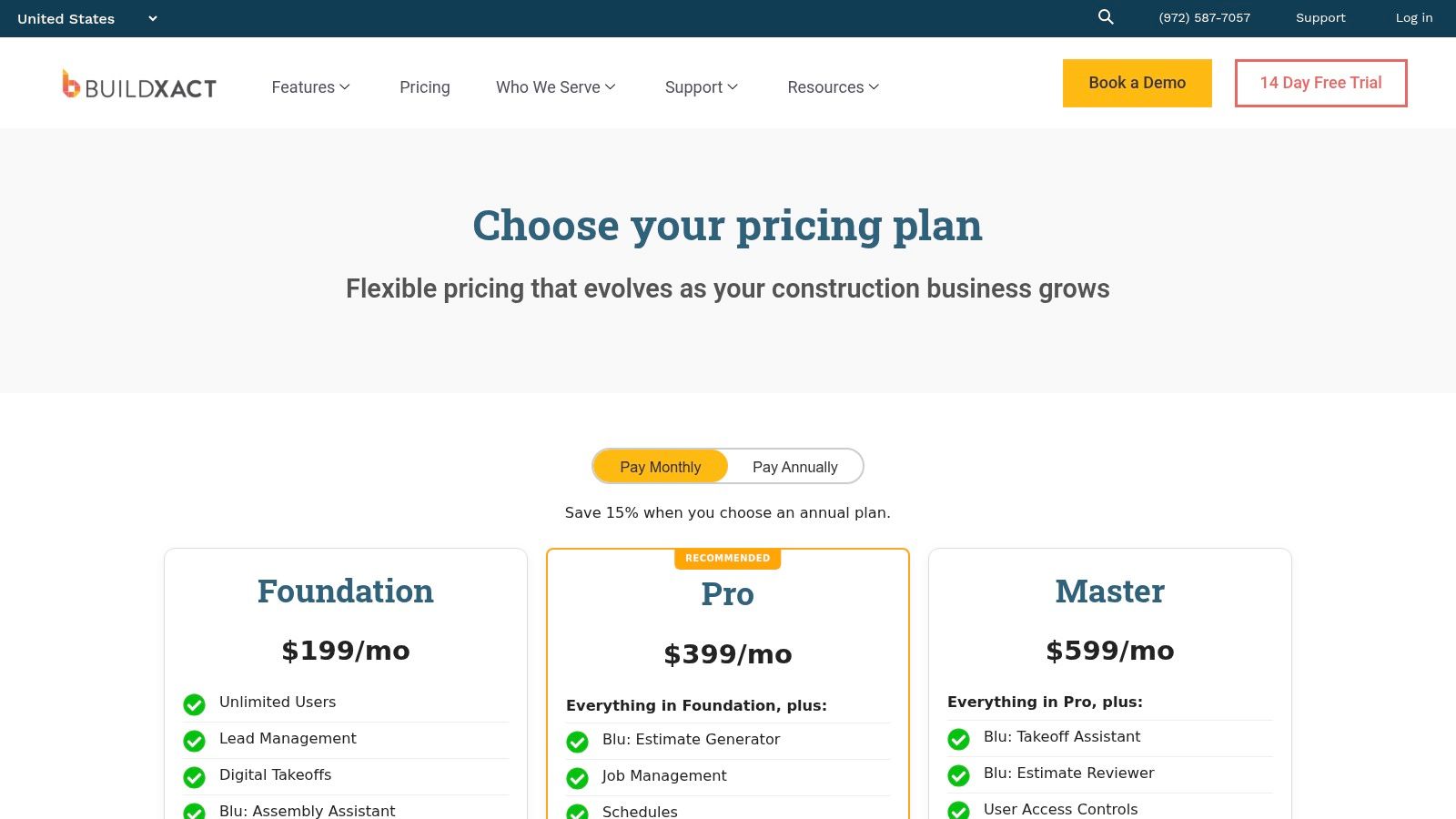
Buildxact Go is a sensible starting point for small builders and remodelers who want an AI-assisted estimate and a client-ready proposal without committing to a full construction platform. The free plan includes estimate credits, so a contractor can test the workflow on real small-job opportunities rather than merely opening a restricted demo.
The useful path is straightforward. Generate an initial estimate, refine the items, prepare a formatted proposal, and use material-ordering connections, including Home Depot integration, where available in the workflow. If the business grows into more detailed plan measurement, live pricing, or scheduling, Buildxact provides a natural paid upgrade path.
Where the free plan works
Buildxact Go fits residential remodelers, small general contractors, and builders pricing repeatable work. AI assistance can reduce the time needed to turn a rough scope into proposal line items, particularly when the estimator already knows the local labor and material rates.
The constraint is the credit limit. A contractor who bids regularly can use the free allowance quickly, and advanced digital takeoff, live pricing, and scheduling require paid access. It also isn't the best match for heavy civil estimating, where assemblies, equipment production, and complex tender structures matter more than fast proposal creation.
Use it when the immediate problem is slow small-job estimating. For a deeper explanation of the cost structure behind estimates, see this guide to construction estimating costs. Validate every AI-generated quantity before treating the result as a bid.
2. ACCA PriMus
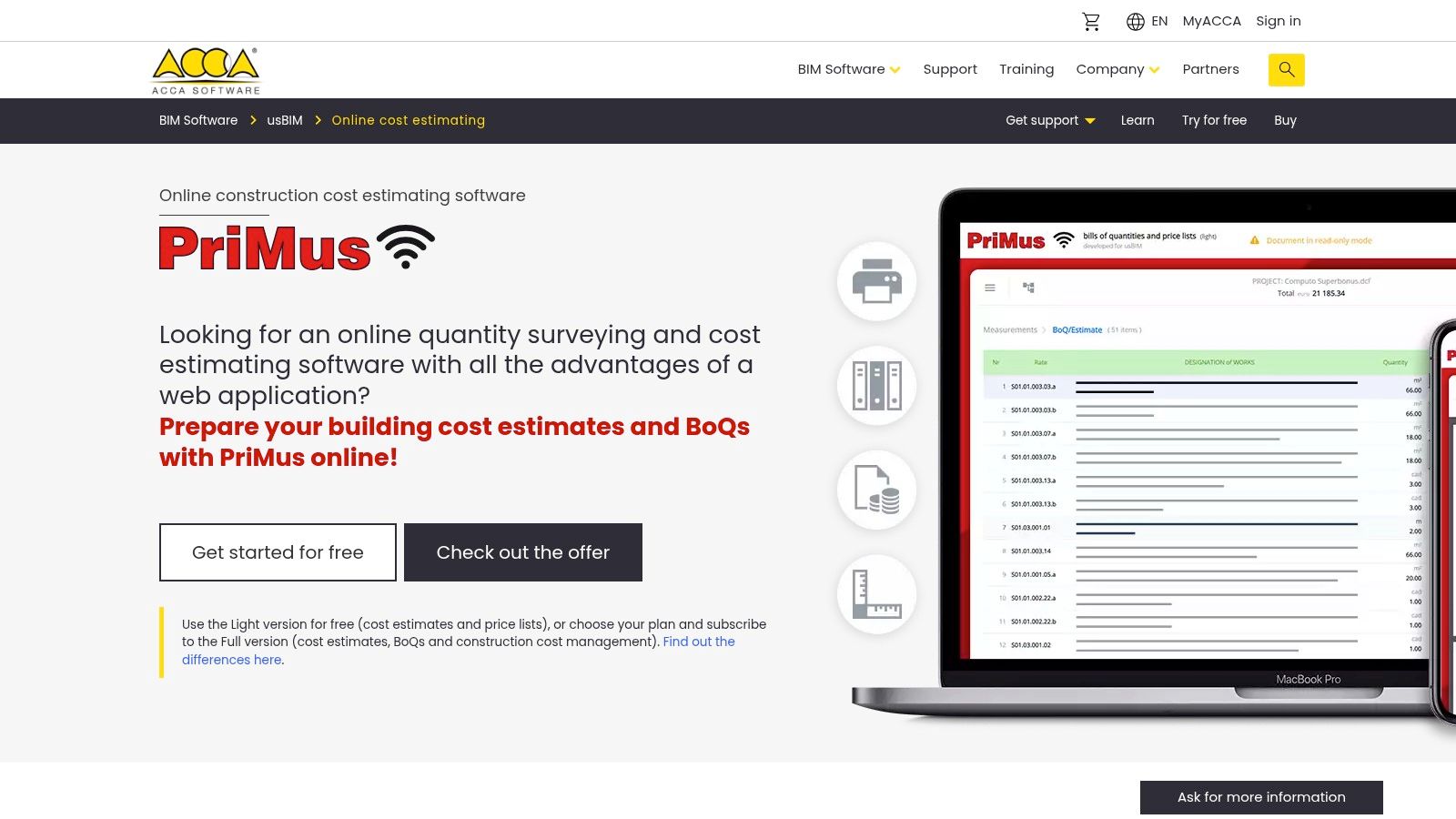
ACCA PriMus takes a more structured, bill-of-quantities approach than the mobile-first tools on this list. The free ecosystem includes PriMus online Light, a browser-based option for estimates and BoQs, and PriMus-DCF, a desktop edition that supports estimate work and exports to DCF and Excel through the ACCA PriMus platform.
That makes PriMus useful when the estimate needs an organized cost document rather than a quick client quote. Quantity surveyors, commercial estimators, and teams that already work with pricebooks can build a more formal estimate structure and pass information into downstream spreadsheets or compatible workflows.
The localization trade-off
The online version supports collaboration, while the desktop edition suits estimators who prefer a local application and export control. Online pricebooks and conversion services add value for firms operating in markets covered by the available catalogs.
U.S. contractors should test the pricebook situation before adopting it. Catalogs and rates may lean toward European workflows, so local labor, material, tax, and supplier pricing will need careful setup. Advanced 5D and BIM functions are paid extras, which means the free tools are strongest for BoQ preparation and cost organization, not a complete model-based estimating environment.
PriMus is a good fit for quantity surveyors and commercial teams that value structured documentation. It is less attractive for a solo remodeler who needs a quote from a phone in a few minutes.
3. eTakeoff Dimension Basic
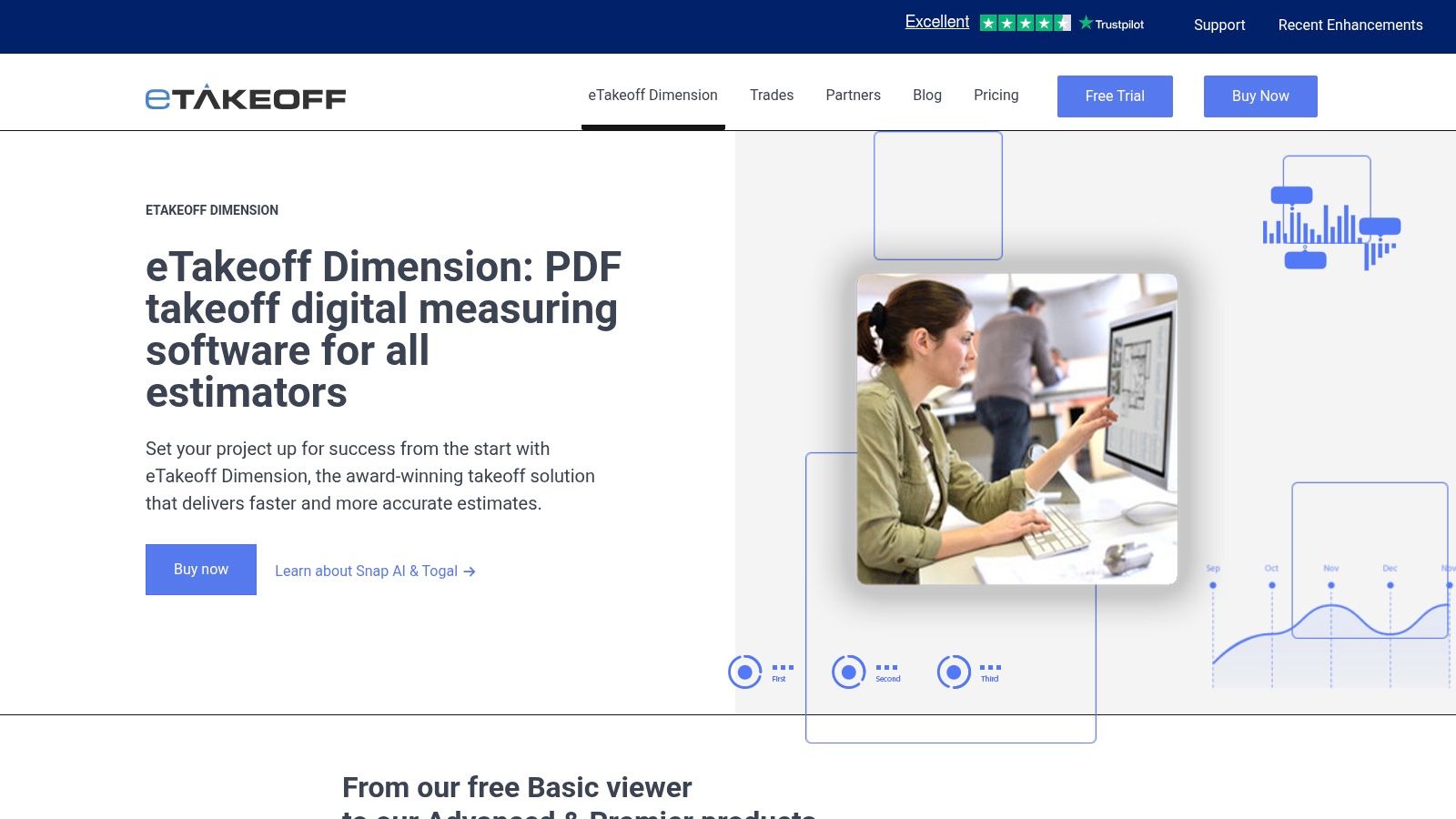
eTakeoff Dimension Basic is a free digital ruler for contractors who need to measure electronic drawings and PDFs without immediately purchasing a full estimating suite. It handles straightforward lengths, areas, and counts, making it useful for plan review and quantity capture before costs are assembled elsewhere.
A good measurement-first workflow
The strongest use case is a contractor who already has a spreadsheet, pricebook, or separate estimating system but wants to stop measuring from printed drawings. The Basic edition provides a no-cost way to review plans, apply measurements, and create a repeatable digital takeoff habit.
The upgrade path matters. Advanced and Premier editions add assemblies, automation, and deeper takeoff capabilities, so a team doesn't have to abandon the platform when manual measurement becomes the bottleneck. That continuity can reduce retraining and preserve established plan-markup conventions. The eTakeoff Dimension product page describes the available editions and workflow.
The free edition is not a complete bid builder. It won't give you a full cost database, advanced assemblies, or automated quantity extraction. Its desktop workflow is also Windows-focused, which can be a problem for teams that estimate across Macs, tablets, and browser-only environments.
For a practical explanation of how measured quantities become material and labor costs, use this guide to cost estimating tools. eTakeoff works best when measurement is the problem and pricing already exists somewhere else.
4. Contractor+
Contractor+ is built around the field contractor's full client workflow rather than takeoff alone. Its Freedom plan provides estimates and invoices, item details, photos, signatures, basic CRM, job tracking, and access through iOS, Android, and the web at Contractor+.
That combination suits solo trades and small crews that measure on site, price from a catalog, and need to send a professional quote before leaving the property. Materials and labor catalogs can be imported, which gives a contractor a practical way to move existing pricebooks into a mobile estimate process.
Where free becomes restrictive
The estimate-to-invoice flow is the main advantage. A plumbing, electrical, HVAC, painting, or remodeling contractor can keep client details, create an estimate, capture approval, and continue into billing without stitching together several apps.
Free usage caps are the practical concern. Monthly limits can become costly in administrative time if the team must delete old records, split work across accounts, or upgrade in the middle of a busy period. AI pricing lookups and deeper automation also require paid plans, so the free tier is better for repeatable catalog-based work than complex plan-driven bids.
Contractor+ is a strong first test for a solo trade that needs mobile quoting. It isn't a replacement for detailed PDF takeoff, heavy estimating assemblies, or civil tender management.
5. Methvin
Methvin is one of the more capable free options for contractors who want estimating, tendering, scheduling, and project structure in one cloud environment. The Starter tier supports estimate build-up with items and assemblies, while civil-oriented workflows include scheduling, work breakdown structures, and process management through Methvin's pricing page.
The free tier is especially useful for a civil contractor or general contractor with occasional bids who wants to test a connected workflow before paying for a broader rollout. PMIS features are available to unlimited users, while the estimating, job costing, and BIM applications are limited to five projects on the Starter plan, as described by the product's plan information.
Best for civil and general contractors
Methvin's strength is breadth. A team can explore estimate build-up, tender workflows, scheduling, and project information management without assembling separate applications. That makes it more relevant to infrastructure, heavy construction, and general contracting than a simple mobile quote tool.
The interface can feel heavier than apps designed primarily for quick field estimates. The project limit also matters. A contractor who maintains many active opportunities may find that the free plan is suitable for evaluation but not for a permanent operating system.
Practical rule: Use Methvin when you need to test the relationship between estimating and project management, not just produce a fast proposal.
It is a good candidate for civil contractors and small GCs with structured bids. Remodelers who only need a short item list and a signature may find the setup more than they need.
6. Solid Takeoff
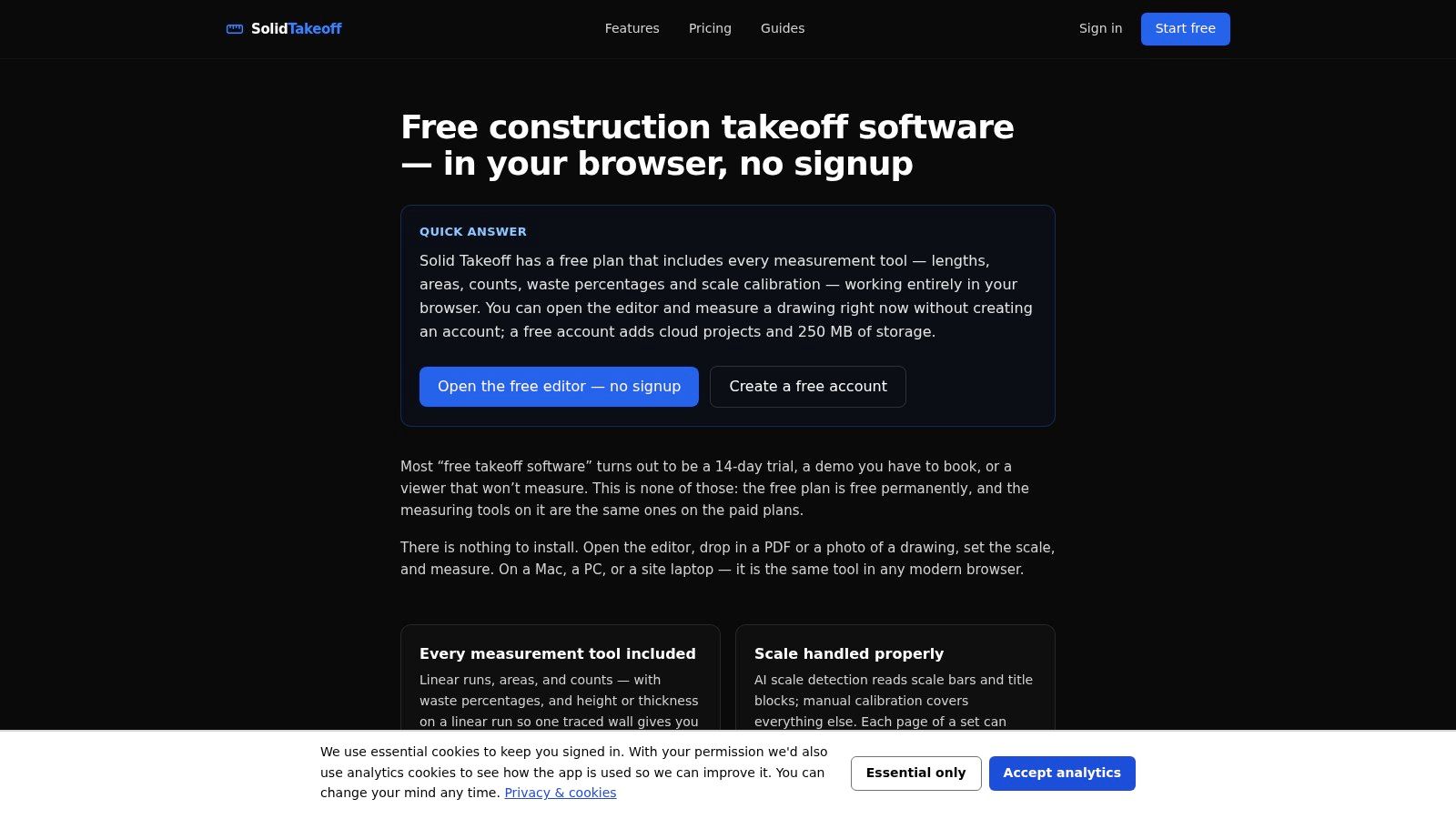
Solid Takeoff focuses on the quantity side of estimating. It runs in the browser, provides length, area, and count measurements, supports scale calibration, and lets users export quantities for use in another estimate template through Solid Takeoff's free plan.
That narrow scope is a benefit when the estimator already has a reliable cost workbook or pricebook. Upload a PDF, calibrate the scale, measure the relevant areas or counts, apply waste controls where appropriate, and transfer the resulting quantities into the pricing workflow.
Quantity capture without installation
The browser-based model makes Solid Takeoff easy to test across office and field devices. It can suit concrete, flooring, painting, sitework, and other trades that need reliable plan measurements but don't need integrated bid leveling or a built-in cost database.
The free plan's storage and project limits should be checked before the team depends on it. A takeoff-only tool can also create an extra handoff. Every exported quantity must be mapped correctly to labor, material, equipment, waste, and overhead in the separate estimate.
Use it when takeoff is the bottleneck and pricing is already standardized. This material takeoff guide explains the handoff from measured quantities to a usable estimate. Solid Takeoff won't replace a full estimating platform, but it can remove the most repetitive measurement work.
7. BidSheet
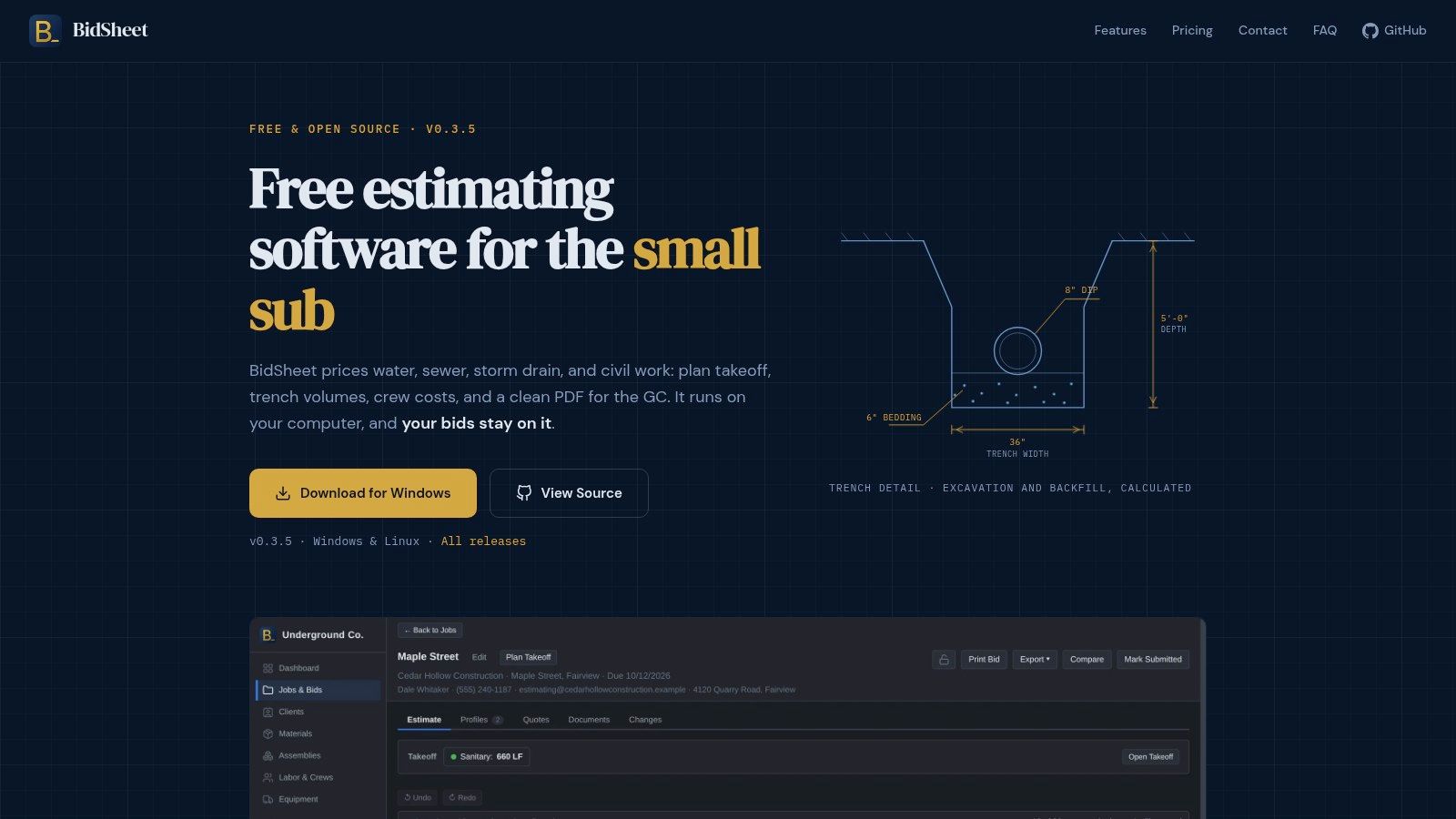
BidSheet takes a different route. It is open-source estimating software aimed at underground utility subcontractors, with a structured item database and job-oriented breakdowns. Its GPLv3 model gives a technically capable team the right to inspect, extend, and self-host the system through BidSheet.
The appeal is control. A utility subcontractor can shape the workflow around its own production units, crew assumptions, materials, and recurring scope instead of adapting every bid to a commercial platform's categories. There are no license fees for the software itself, and the data can remain within an environment the company controls.
Customization has a labor cost
Self-hosting is also the main drawback. Someone must handle deployment, updates, backups, user access, and troubleshooting. A contractor without technical support may spend more time maintaining the tool than the license savings justify.
BidSheet's out-of-the-box focus is narrower than the other choices here. It makes the most sense for underground utilities and subcontractors with a repeatable, specialized estimating method. A remodeler or broad-scope GC would need to customize the system substantially before it reflected daily work.
Choose BidSheet when ownership and trade-specific control matter more than polished integrations. Don't choose it solely because the license is free. Hosting, configuration, and internal support are still operating costs.
8. Bidwright
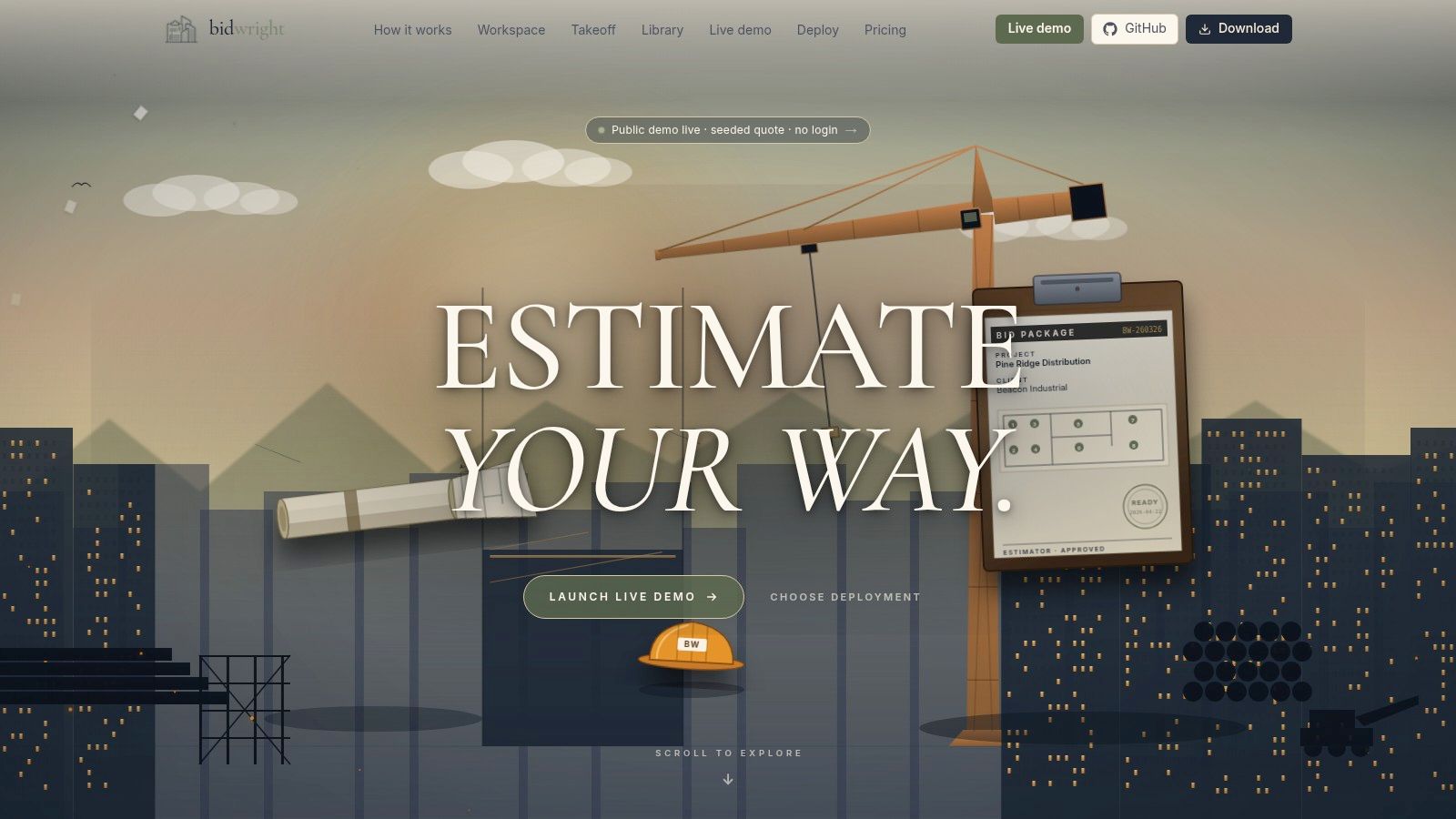
Bidwright is an open-source construction estimating tool for traditional line-item bids, estimate organization, versioning, and collaboration. It can be deployed for a single user or a team server, with managed cloud hosting as a possible route, according to Bidwright's product site.
This structure is valuable for teams that want a transparent estimate history. Versioning can help separate an early scope from a revised bid, while line-item organization keeps labor and materials visible instead of burying them in a single total. A team that has technical capacity can adapt the workflow to its own naming conventions and approval process.
A fit for technically confident teams
Bidwright avoids some vendor lock-in because the codebase and deployment options remain accessible. That matters to contractors who want to preserve their data and build custom connections instead of relying entirely on a vendor roadmap.
The trade-off is operational responsibility. Self-managed instances require technical comfort, maintenance, security controls, and a backup plan. The community and commercial integration ecosystem are also smaller than those of established paid suites, so a team may need to solve more problems independently.
Bidwright is best for a contractor, developer, or internal technology team that values adaptability and can support the deployment. It is not the fastest route for a field estimator who wants to create a quote from a phone. Test the collaboration and versioning workflow before investing time in customization.
9. ProTakeoff
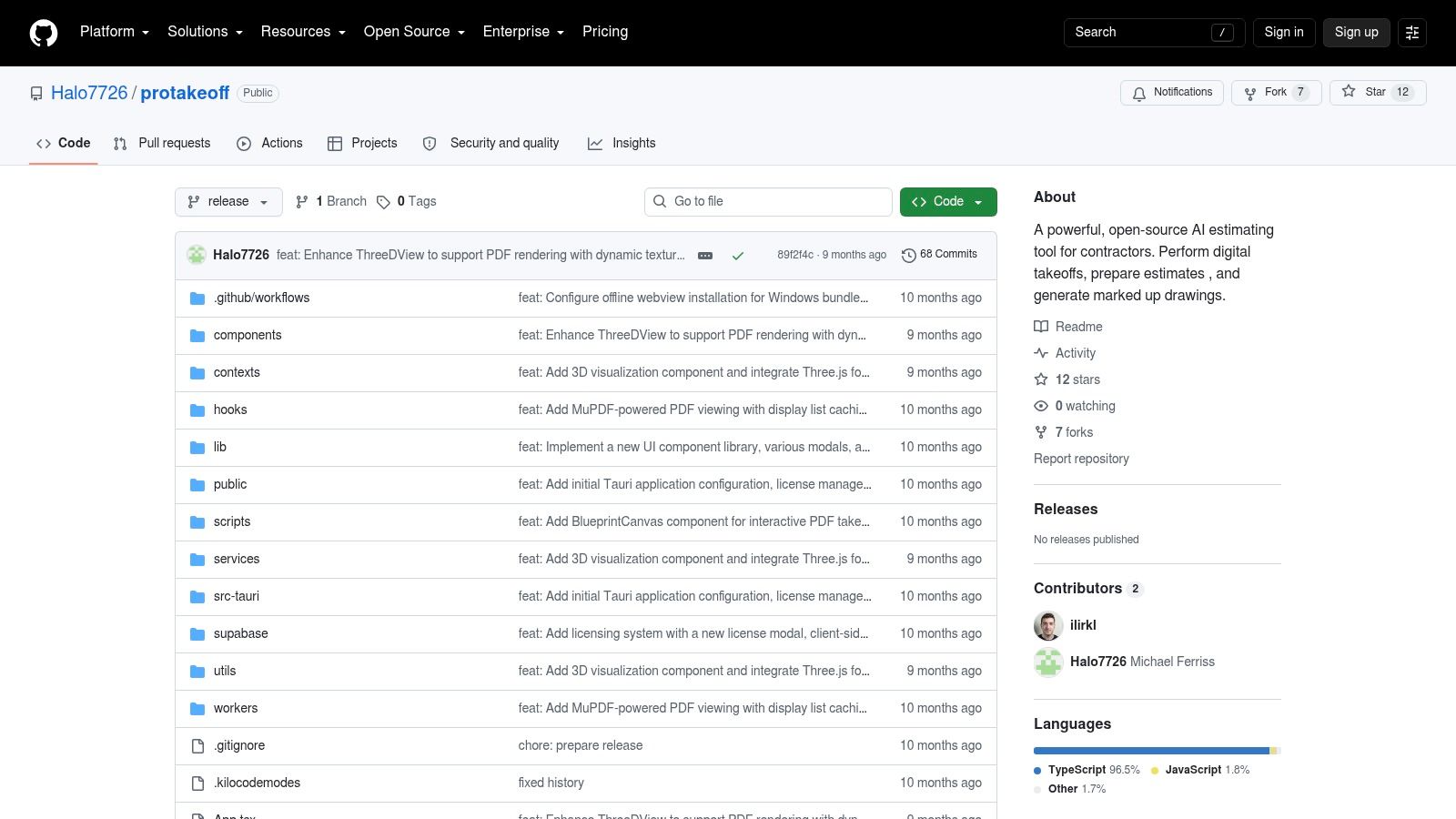
ProTakeoff is an open-source PDF takeoff and estimating option for users who need lengths, areas, counts, drawing markups, and annotations without adopting an enterprise platform. The project is available through its GitHub repository, which also gives technically capable users a path to inspect or modify the code.
The workflow is familiar to anyone who has measured digital plans. Load a PDF, calibrate or confirm the drawing scale, mark quantities, annotate the sheet, and use the results as the foundation for a cost estimate. For a small trade, that can be enough to replace printed drawings and a separate digital ruler.
The support question matters
The attraction is flexibility without a software license. A contractor who can code may add trade-specific behavior, change the interface, or connect the tool to an internal estimate process. That makes ProTakeoff more interesting than a locked-down free viewer.
It is an early-stage community project, so features may be less mature than those in commercial takeoff products. Official support is limited, and fixes or new capabilities depend on community development. A business-critical estimating workflow needs a person responsible for installation, updates, data preservation, and troubleshooting.
ProTakeoff suits technically capable remodelers, specialty trades, and small software-minded contractors who need core PDF measurement. It is a poor choice when the estimator needs vendor-backed support, deep assemblies, or guaranteed integrations.
10. Platineer Estimate
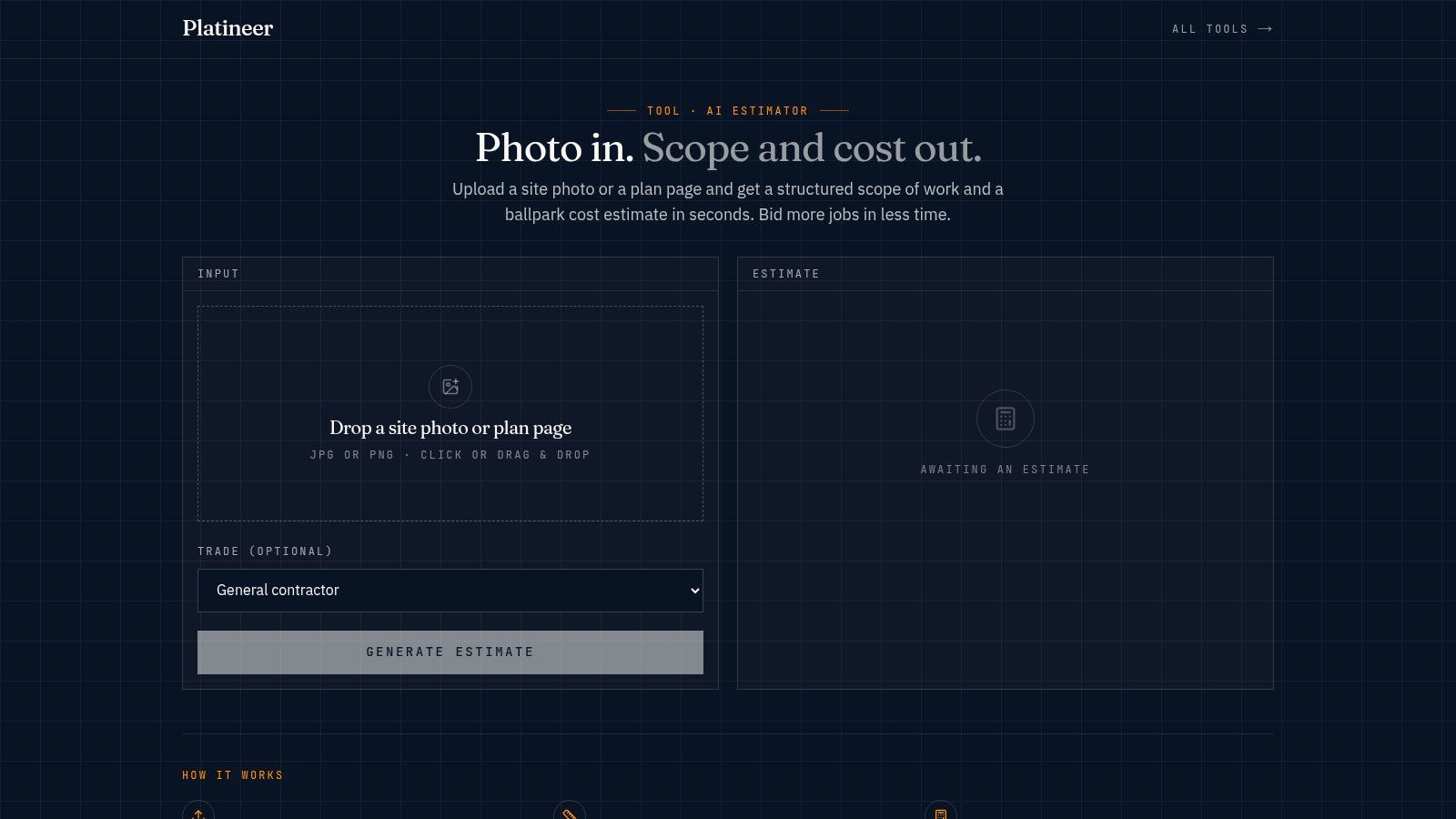
Platineer Estimate is designed for the first decision in the workflow, not the final bid. Upload a plan sheet or jobsite photo and it returns a structured scope, itemized ballpark costs, a timeline and crew estimate, and risk notes. The free Platineer Estimate tool doesn't require a sign-in for quick results.
Its cost view separates labor, materials, equipment, permits and fees, and overhead and profit. Trade presets support contexts such as roofing, concrete, HVAC, and decks, so the output is more useful than an unexplained single total during an early client conversation or internal go-or-no-go review.
Fast triage, not final pricing
The tool saves time at the front of the funnel. A GC can decide whether a lead appears worth a detailed takeoff, a specialty contractor can prepare an initial scope discussion, and a remodeler can communicate a rough direction before investing hours in a full estimate.
The boundary is important. Platineer Estimate doesn't replace measured takeoff, local supplier quotes, production-rate checks, or a detailed bid review. AI can miss concealed conditions, interpret a drawing incorrectly, or use assumptions that don't match the site. Treat its result as a structured first pass, then verify every quantity and rate before bidding.
It is a particularly useful complement to eTakeoff, Solid Takeoff, or a line-item estimating system. Use Platineer for rapid triage, then move qualified opportunities into the detailed workflow that matches the trade.
Top 10 Free Construction Estimating Tools, Quick Feature Comparison
| Product | Core features | UX / Quality (★) | Price / Value (💰) | Target audience (👥) | Unique selling points (✨ / 🏆) |
|---|---|---|---|---|---|
| Buildxact Go | AI-assisted estimates & proposals, material ordering, upgrade path | ★★★★ | 💰 $0 entry (credit-limited); paid tiers | 👥 Small builders & remodelers | ✨ Home Depot integration; easy upgrade |
| ACCA PriMus (Light + DCF) | BoQs, exports/imports, online collaboration & desktop DCF | ★★★★ | 💰 Free Light & desktop; paid 5D/BIM extras | 👥 Quantity surveyors & estimating teams | ✨ Strong export support (DCF/Excel); real-time collaboration |
| eTakeoff Dimension Basic | PDF viewer, lengths/areas/counts, simple takeoff | ★★★★ | 💰 Free Basic; advanced features paid | 👥 Takeoff-focused estimators | ✨ Industry-stable tool; clear upgrade path |
| Contractor+ (Freedom) | Estimates, invoices, CRM, scheduling; mobile-first apps | ★★★ | 💰 Free forever (caps); paid AI & limits | 👥 Solo trades & small contractors | ✨ Mobile estimate→invoice flow; easy pricebook import |
| Methvin (Starter) | Estimating, tendering, PMIS, civil-friendly scheduling | ★★★ | 💰 Free Starter (5 projects); scalable modules | 👥 Civil & general contractors | ✨ PMIS free with unlimited users; civil features |
| Solid Takeoff | Browser 2D takeoff (length/area/count), scale calibration | ★★★ | 💰 Free plan; limits may apply | 👥 Trades needing quick quantities | ✨ No-install browser access; quick exports |
| BidSheet | Open-source estimating DB & job breakdowns (GPLv3) | ★★★ | 💰 Free (self-host); DIY hosting costs | 👥 Underground-utility subs & devs | ✨ Fully customizable; no license fees |
| Bidwright | Line-item estimating, versioning, team/server deploy | ★★★ | 💰 Free/open-source; hosting or managed costs | 👥 Teams wanting customizable workflows | ✨ Transparent codebase; team deployment options |
| ProTakeoff | PDF quantity takeoff, markups, open-source codebase | ★★ | 💰 Free; community-supported development | 👥 Developers & DIY estimators | ✨ Lightweight open-source takeoff; extendable |
| Platineer Estimate 🏆 | Plan/photo→AI ballpark estimate: line items, cost split, timeline & risks | ★★★★★ | 💰 Free no-login ballpark; fast triage before bids | 👥 Trades seeking rapid go/no‑go & early leads | ✨ Early-pipeline detection, decision-maker contacts, market mapping; 🏆 Recommended |
Choose the Smallest Stack That Saves Time
The best free construction estimating software is the smallest combination of tools that removes a real bottleneck. Don't choose an all-in-one platform just because it lists more features. A roofing contractor who needs fast early qualification may benefit more from AI triage and a dedicated measurement workflow than from a complex project system. A civil contractor with assemblies, tender packages, and job costing needs a different foundation.
Start by identifying where the estimate slows down:
- Early feasibility: Use Platineer Estimate to turn a plan page or photo into a structured scope and ballpark range. Review the assumptions before sharing the output.
- Quantity capture: Choose eTakeoff Dimension Basic or Solid Takeoff when measuring PDFs is the main source of lost time.
- Repeatable line-item bids: Use PriMus, Bidwright, BidSheet, or a similar structured system when the estimate depends on reusable items, assemblies, and versions.
- Estimate-to-invoice work: Contractor+ and Buildxact Go are more relevant when client proposals, approvals, and billing need to stay connected.
- Broader operations: Methvin is the stronger test for contractors that want estimating to flow into scheduling, tendering, project information, or job costing.
Run one representative plan through the tool before making a decision. Record how long it takes to reach a usable estimate, how many manual transfers occur, and how much rework is needed after review. Then compare the result with your current method. Time savings only become money savings when the workflow reduces actual estimator effort without creating errors downstream.
Check local labor and material rates before relying on any price output. Create a mandatory review checkpoint for AI-generated scopes, especially when the drawing is incomplete or the site has concealed conditions. Also check the free-tier limits early. A credit cap, project limit, storage restriction, missing export, or paid integration can become more expensive than expected once the team has built its process around the tool.
A complementary workflow can pair Platineer Estimate with Platineer Render when visual communication helps move a project forward. Estimate supports rapid scope triage, while Render can help a remodeler or contractor show a client how a proposed job may look. Neither removes the need for detailed construction review, but both can reduce the time between a raw lead and a useful conversation.
Free software is valuable when it protects estimating capacity. The cheapest tool isn't the one with the lowest subscription price. It's the one that removes enough manual work, duplicate entry, and avoidable delay to help your team price carefully while still responding quickly. Test the workflow, verify the numbers, and upgrade only when the free tier creates measurable risk or rework.
Platineer offers an AI construction estimator for turning plan pages and jobsite photos into structured scopes and ballpark estimates, along with a Render tool for faster visual communication. Use Platineer to test whether rapid scope triage and job visualization can improve your estimating workflow before you commit to a larger software stack.